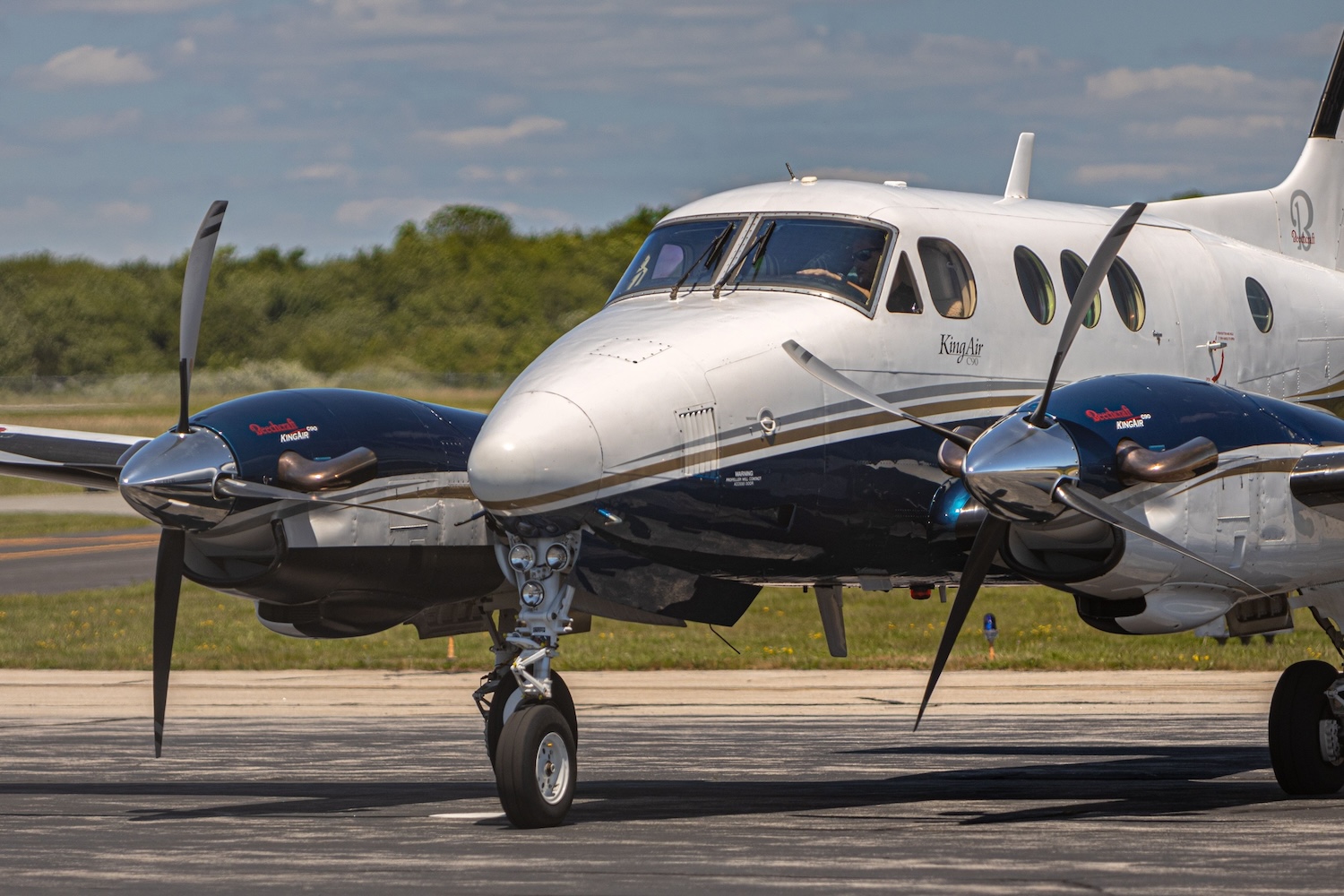
 The Cost To Fly A Beechcraft King Air reflects its $3 million price and substantial operating expenses. With a range of 1,806 nautical miles and a cruising speed of 312 knots, this twin-propeller aircraft delivers impressive performance. Annual costs, including $892,242 in variable and $479,746 in fixed expenses, highlight its robust capabilities. Compared to pricier competitors like the Piaggio P.180 Avanti, the King Air offers affordability and longevity. Explore why the Cost To Fly A Beechcraft King Air makes it a top choice for aviation enthusiasts.
According to Aircraft Cost Calculator, the average price of a Beechcraft King Air 350 is $3 million. Further costs associated with King Air ownership include fuel and maintenance. The Aircraft Cost Calculator identifies the total variable costs as $892,242, the total fixed costs as $479,746, and an annual budget of $1,371,988 for those flying the aircraft 450 hours per year. These costs result in an operating cost of $3,049 per hour. Meanwhile, AvBuyer.com states that King Air 350 aircraft cost between $2.7 million and $4 million.
In this article, discover more about what owners are getting for these costs with a Beechcraft King Air. This includes the King Air’s performance and how it compares to its competitors.
Performance By The Numbers: How the Beechcraft King Air Measures Up
The 350i has impressive specifications for a twin-propeller aircraft that has made it incredibly popular. Across all King Air variants, the 6,000th example was delivered on January 24, 2005. The aircraft continues to be manufactured, even though it has been developed into the Beechcraft 1900, of which 695 have been built.
The Beechcraft Super King Air 350i can carry up to 11 passengers comfortably, carrying a useful load of up to 5,145 lb (2,334 kg). The aircraft has a high ceiling of 35,000 ft (10,668 m) and is 46 ft 8 in (14.22 m) long.
There is some variation between the three most common variants of Super King Air: 250, 350i and 350ER. The 250 is a lighter aircraft with a maximum take-off weight of 12,500 lbs and a capacity of 11 passengers. It is also powered by the slightly weaker PWC PT6A-52 producing 850 shp. Its range and cruising speed are slightly lower than the standard King Air 350 at 310 knots and 1,720 nautical miles respectively. The 350ER has similar specifications to the 350i, but with a substantially higher range. This aircraft can fly an impressive 1,806 nautical miles. As it is powered by the same engine as the 350i, but has a longer range and higher maximum take-off weight, the 350ER cruises at a slightly lower speed of 303 knots.
| Variant | 350i |
|---|---|
| Max Range | 1,806 nm (3,345 km) |
| Cruising Speed | 312 knots (578 km/h) |
| Fuel Capacity | 3,611 lbs (1,638 kg) |
| MTOW (Maximum Takeoff Weight) | 15,000 lb (6,800 kg) |
| Empty Weight | 4,516 kg (9,955 lb) |
| Typical Payload | 2,500 lb (1134 kg) |
| Wingspan | 57 ft 11 in (17.65 m) |
| Engines | 2x PWC PT6A-60A producing 1,050 shp of thrust |
| Entry into Service | 1972 (military) or 1974 (civil) |
How The Super King Air Achieves This Performance
The aircraft owes much of its impressive performance to its powerplant, the Pratt & Whitney PT6A-60A. This engine is part of the PT6 line of engines that was first produced in 1960. As of February 2023, 64,000 PT6 engines have been built. PT6 engines are also used in the Cessna 208 Caravan, de Havilland Canada DHC-6 Twin Otter, Pilatus PC-12 and Piper M700 Fury, although the PT6A-60A is exclusive to the Beechcraft Super King Air 300 and 350.
Although the Super King Air has a ceiling of 35,000 ft (10,668 m), it runs most efficiently at the lower cruising altitude of 28,000 ft (8,500 m) with a speed of 310 knots. King Air pilots often don’t have to worry about weather conditions as much when operating the King Air. It is common for high air temperatures to worsen an aircraft’s take-off performance, but this is not the case for the Super King Air. The aircraft can take-off safely at temperatures above 120 Fahrenheit.
How It Compares To Competing Aircraft
The Super King Air has outlasted its direct competitors. The only other pressurized multi-engine turboprop utility aircraft still in production is the Piaggio P.180 Avanti. The Super King Air family even outlasted its intended replacement, the Model 2000 Starship. This aircraft was produced from 1983 to 1995 and only 53 were built. Beech blamed the Starship’s poor performance on its novelty design, the economic slowdown in the late 1980 and a tax on luxury goods.
One of the key reasons that the Beechcraft has had such longevity is its affordability. A comparatively small 246 Piaggio P.180 Avantis were built from its introduction in 1990 to 2020, which could be due to its high equipped price in 2021 of $7,695 million. The Starship’s sales also suffered due to the price demanded of customers. In 1989, the list price was $3.9 million. This is comparable with the Cessna Citation V and Lear 31 jets, which were 89 and 124 knots faster than the Starship at maximum cruise.
Click here to continue reading
Original article published on simpleflying.com